Manipulation Tactics
A Deep Dive Into Hidden Emotional Control
Introduction
Manipulation tactics are psychological strategies people might use—often unconsciously—to influence and control others. Whether in romantic relationships, friendships, family dynamics, or the workplace, these behaviors can severely undermine your well‑being. This guide breaks down the most common tactics, illustrates them with vivid examples, and offers clear signs to look out for.
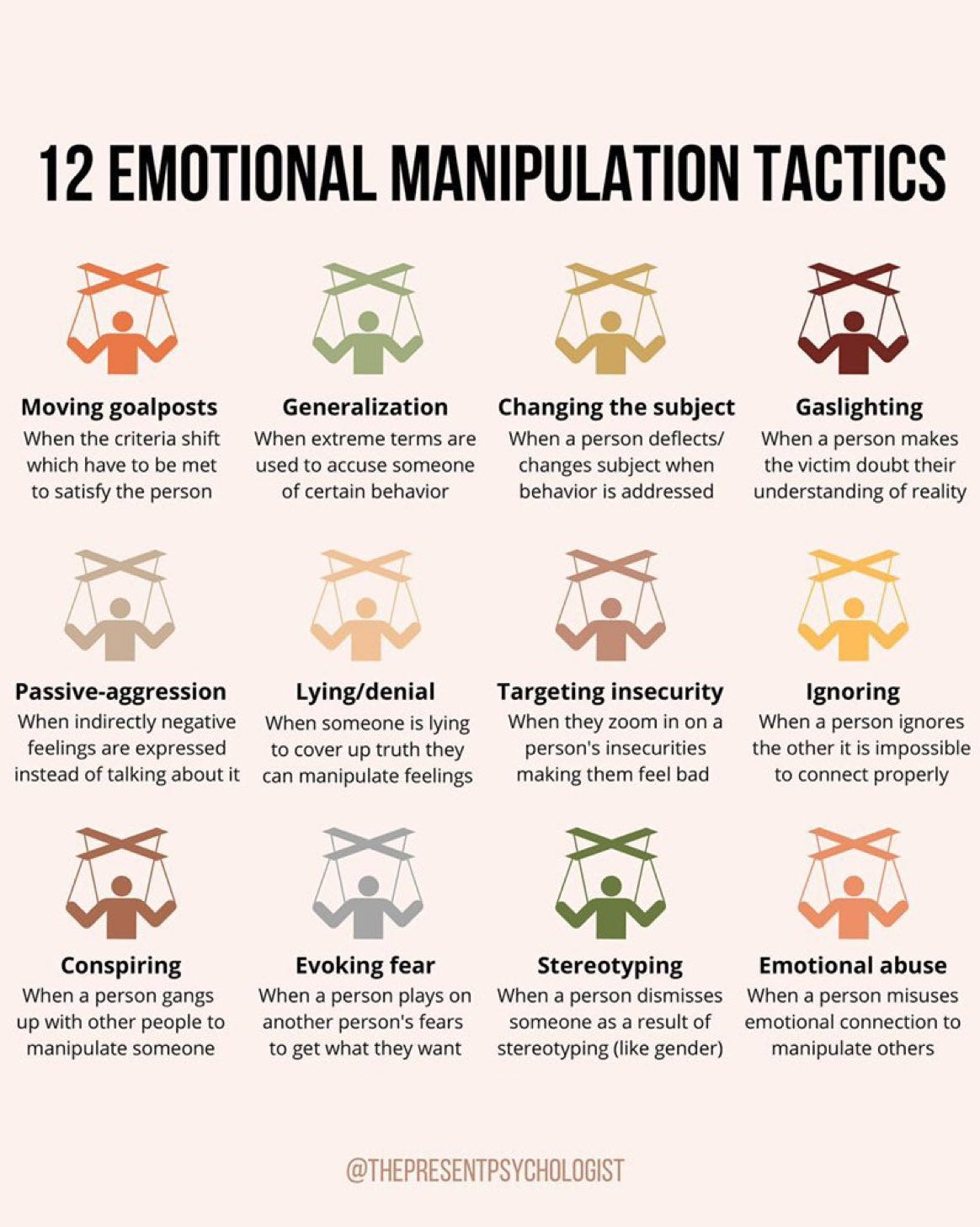
1. Gaslighting
What it is: Making you doubt your own reality, memory, or sanity.
Example: You recall a rude comment from them at dinner. They respond: “You’re imagining things; I never said that—you’re too sensitive.”
Spot it when:
You begin questioning your own recollections.
You feel “crazy” or like you’re losing your grip on reality.
They frequently dismiss your feelings as “overreaction.”
What to do: Keep written records of conversations and incidents; seek support to validate your experience.
2. Guilt‑Tripping & Emotional Blackmail
What it is: Leveraging guilt, fear, or obligation (the “FOG” model) to compel you.
Example: “After everything I’ve done for you, this is how you repay me?” or “If you don’t do this, I’ll be hurt or lose everything.”
Spot it when:
You experience persistent guilt—even when you’ve done nothing wrong.
You feel coerced into complying to avoid emotional fallout.
The relationship feels conditional (“I’ll love you if…”).
What to do: Practice assertive “I” statements, identify manipulative ultimatums, and reinforce your boundaries.
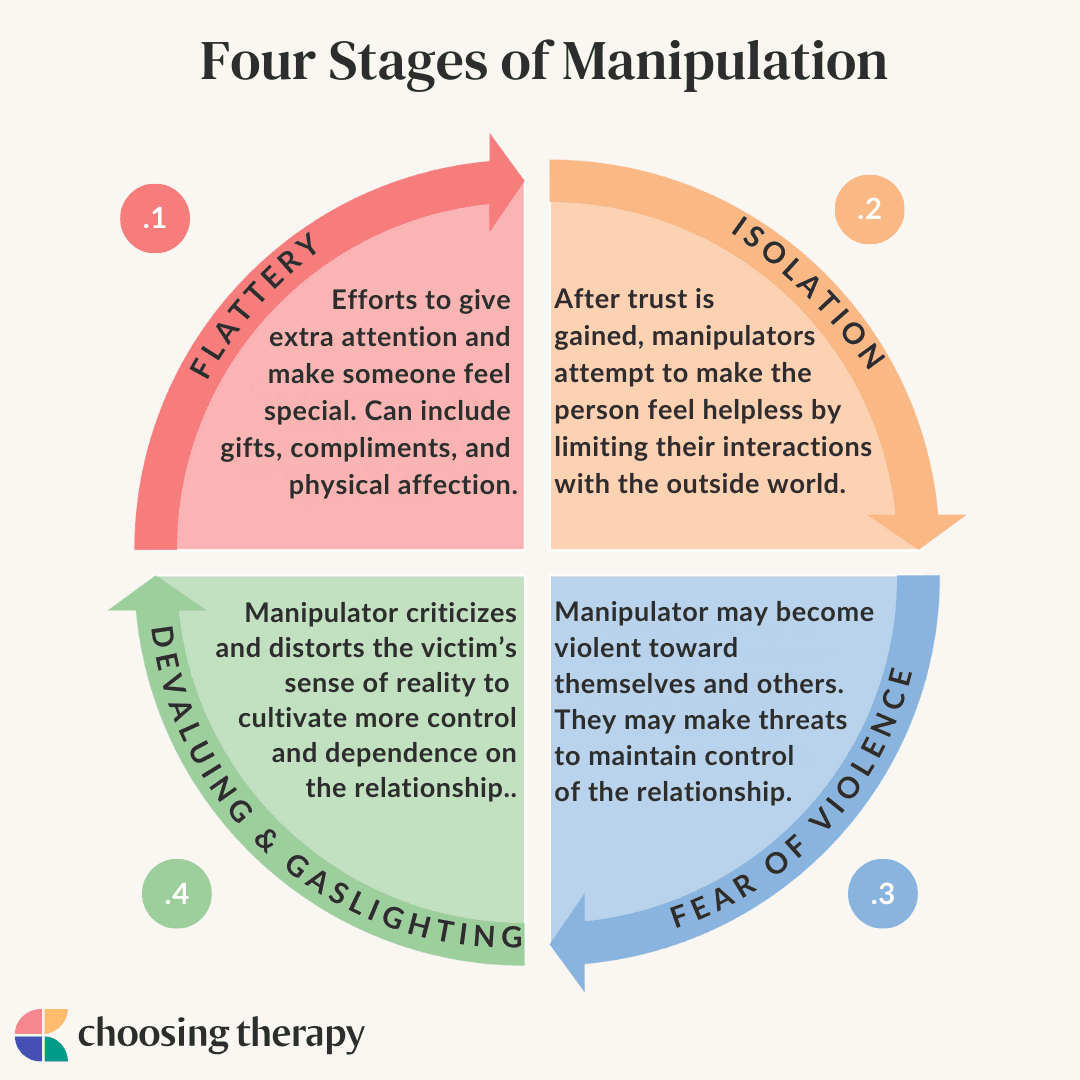
3. Love Bombing & Flattery
What it is: Overwhelming you with affection, praise, or attention early on to build trust before control.
Example: “You’re the only person who really gets me,” followed by criticism or control once you’re invested.
Spot it when:
They move too fast emotionally—“too much, too soon.”
Compliments feel gratuitous or strategic.
Once you reciprocate, their positivity shifts to demands or criticism.
What to do: Slow the pace, seek balanced interactions, and maintain skepticism of overly idealized gestures.
4. Moving the Goalposts & Passive‑Aggression
What it is: Constantly shifting expectations or responding to your efforts with vague resistance.
Example: You meet a deadline—yet they say it’s “not quite right.” Next time, they expect even more.
Spot it when:
Nothing is ever “enough,” so you’re left chasing approval.
They respond with whining, sarcasm, or silent resentment rather than honest feedback.
What to do: Ask for specific, measurable feedback and push back on shifting standards: “That’s different from our last agreement—can we clarify?”
5. Triangulation & Invisible Alliances
What it is: Involving a third party to validate their position or isolate you.
Example: “My friend also thinks you’re wrong,” without letting you address the friend directly.
Spot it when:
Third parties are often invoked as validation without direct communication.
You feel outnumbered, undermined, or unfairly judged.
What to do: Ask to hear concerns directly from third parties or challenge their involvement: “Why can’t we discuss this ourselves?”
6. Projection
What it is: Accusing you of feelings, thoughts, or behaviors they actually have.
Example: They hide an important email, then accuse you of hiding things.
Spot it when:
The accusations feel off-base or “mirror your own behavior.”
Their reproaches confuse you because they describe their own patterns.
What to do: Call it out: “That sounds like something you’re doing—and blaming me for.”
7. DARVO (Deny–Attack–Reverse Victim and Offender)
What it is: You confront them; they deny wrongdoing, attack you, then claim THEY are the victim.
Example: You say they shut you out during a conflict; they retort: “You’re the one ignoring me—look how badly you’ve treated me.”
Spot it when:
Their first reaction is denial, then blame-shifting, then role reversal.
You end up defending yourself or apologizing for an issue you raised.
What to do: Document events, don’t let their deflection derail your complaint, and seek objective advice.
8. Condescension & Name‑Calling
What it is: Subtle denigration—belittlement, insults, eye‑rolling—to undermine your confidence. ([psychcentral.com][7])
Example: “Oh sweetie, I didn’t expect you to understand that,” or sarcastic comments about your intelligence.
Spot it when:
You’re visibly dismissed or made to feel inferior in subtle ways.
You notice your self-esteem eroding over time.
What to do: Call it out calmly: “That remark came off condescending—can you explain?” If it persists, reevaluate the dynamic.
9. Silent Treatment & Withholding
What it is: Refusing to communicate or share, punishing you emotionally. 
Example: They stop replying for days, then say, “Fine, I forgot. You’re overreacting.”
Spot it when:
They withdraw suddenly, expecting you to beg for reconciliation.
You feel anxious or guilty, unsure what you did.
What to do: State your boundary: “I won’t engage with silence as punishment. Let me know when you’re ready to talk.”
10. Subtle Undermining (Dry‑Begging, Backhanded Compliments, Mood Manipulation)
What it is: Indirect signals, passive hints, mood shifts, or backhanded comments to influence you.
Example: They say: “I guess it’s fine if I just stay home tonight,” then frown when you agree.
Spot it when:
Communication is ambiguous—you feel guilted into deciphering feelings.
Emotional whiplash—mood shifts designed to destabilize.
Compliments feel like hidden jabs.
What to do: Call for clarity: “Was that a request or a complaint? Please speak directly.”
Why These Tactics Flourish
Power imbalances: One gains control.
Low self-esteem or emotional vulnerability: Victims are easier to exploit.
Personality disorders: Narcissistic, antisocial, or borderline traits often correlate with persistent manipulation. ([en.wikipedia.org][8], [verywellhealth.com][9])
How to Defend Yourself
1. Recognize patterns – If you feel “off,” anxious, confused, or overly guilty, pause and reflect.
2. Keep records – Journals, texts, dates—these help when memory is challenged.
3. Set clear boundaries – Learn to say “no” and stand firm.
4. Use connected communication – Use “I feel…” and “I notice…” to express how their behavior impacts you.
5. Seek external support – Trusted friends, family, counselors can provide validation and perspective.
Final Thoughts
Manipulation often masks itself beneath charm, care, or concern. By understanding these tactics, you empower yourself to reclaim emotional authority. Healthy relationships are rooted in respect, honesty, and accountability—not guilt, control, or unpredictable emotional games. Your perceptions, emotions, and boundaries are valid. Trust them—and act on them.